The FIRE Movement: Your Complete Guide to Financial Independence
 By
By The FIRE Movement: Your Complete Guide to Financial Independence
Table of Contents
1. What is the FIRE Movement?
2. The Core Principles of FIRE
3. Types of FIRE: Finding Your Path
4. Building Your FIRE Strategy
5. Investment Approaches for FIRE
6. Common Challenges and How to Overcome Them
7. Real-Life FIRE Success Stories
8. Is FIRE Right for You?
9. Frequently Asked Questions
Introduction
Imagine waking up tomorrow without the pressure of checking your bank account or worrying about your next paycheck. Picture having the freedom to pursue your passions, travel the world, or simply spend more time with loved ones—all while maintaining financial security. This isn’t just a dream; it’s the reality that thousands of people are creating through the FIRE movement.

FIRE, which stands for Financial Independence, Retire Early, has transformed from a niche concept into a global phenomenon that’s reshaping how we think about money, work, and life itself. Whether you’re drowning in debt, stuck in a job you hate, or simply seeking more control over your financial future, understanding the FIRE movement could be the key to unlocking a life of unprecedented freedom and security.
What is the FIRE Movement?
The FIRE movement represents a lifestyle philosophy centered around aggressive saving, strategic investing, and intentional living to achieve financial independence decades earlier than traditional retirement age. Unlike conventional retirement planning that targets age 65, FIRE enthusiasts often aim to retire in their 30s, 40s, or early 50s.
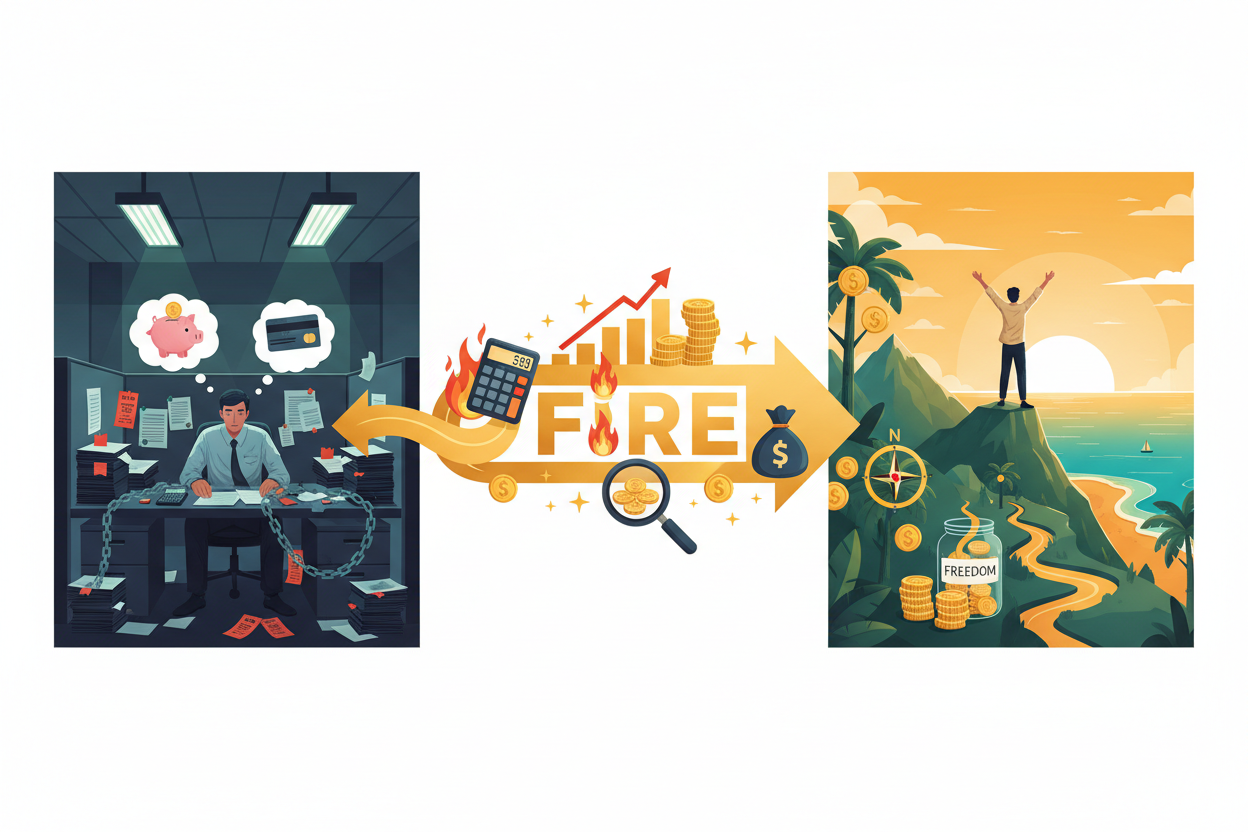
At its core, FIRE isn’t just about accumulating wealth—it’s about buying back your time and creating options. Financial independence means having enough passive income from investments to cover your living expenses without relying on traditional employment. This doesn’t necessarily mean you’ll never work again; rather, it means work becomes a choice, not a necessity.
The movement gained significant traction after the 2008 financial crisis when many people realized the fragility of traditional employment and began seeking alternative paths to financial security. Today, online communities, blogs, and podcasts dedicated to FIRE strategies have millions of followers worldwide, sharing tips, success stories, and support for those pursuing this unconventional approach to financial planning.
The Core Principles of FIRE
The FIRE movement operates on several fundamental principles that distinguish it from traditional financial advice. The most crucial principle is the concept of living well below your means—not just spending less than you earn, but dramatically reducing expenses while maximizing income.
The mathematical foundation of FIRE relies heavily on the “4% rule,” which suggests that you can safely withdraw 4% of your investment portfolio annually without depleting your principal. This means if you need $40,000 per year to live comfortably, you’d need to accumulate $1 million in investments ($40,000 ÷ 0.04 = $1,000,000).
Another core principle involves aggressive saving rates, typically ranging from 50% to 70% of income—far exceeding the traditional recommendation of 10-15%. This requires a fundamental shift in mindset about consumption and lifestyle choices. FIRE practitioners often embrace minimalism, prioritize experiences over possessions, and make deliberate decisions about every purchase.
Income optimization plays an equally important role. This might involve developing high-income skills, starting side businesses, investing in real estate, or creating passive income streams. The goal is to create as large a gap as possible between income and expenses, allowing for maximum investment contributions.
Types of FIRE: Finding Your Path
The FIRE movement isn’t one-size-fits-all. Different approaches have emerged to accommodate various income levels, lifestyle preferences, and risk tolerances. Understanding these variations can help you choose the path that best aligns with your circumstances and goals.
Lean FIRE focuses on achieving financial independence with a modest lifestyle and lower expense requirements. Practitioners typically aim for $500,000 to $1 million in investments, planning to live on $20,000 to $40,000 annually. This approach requires significant lifestyle adjustments but can be achieved on moderate incomes through extreme frugality and careful planning.
Fat FIRE targets a more luxurious retirement lifestyle, requiring $2.5 million or more in investments to support annual expenses of $100,000 or higher. This path typically requires high incomes and longer accumulation periods but allows for greater lifestyle flexibility in retirement.
Barista FIRE represents a middle ground where individuals accumulate enough investments to cover basic expenses but continue working part-time or in lower-stress jobs to cover discretionary spending. This approach reduces the total investment requirement while maintaining some income and often health insurance benefits.
Coast FIRE involves saving aggressively early in your career until you’ve accumulated enough that compound growth alone will provide for traditional retirement, allowing you to reduce savings rates and increase current lifestyle spending while still maintaining long-term security.
Building Your FIRE Strategy
Creating a successful FIRE strategy begins with honest assessment and clear goal setting. Start by calculating your current expenses and determining your target annual spending in financial independence. This number becomes the foundation for all other calculations and decisions.
Expense tracking and optimization form the cornerstone of any FIRE plan. Many practitioners use detailed budgeting apps or spreadsheets to monitor every dollar spent, identifying areas for reduction without sacrificing quality of life. Common strategies include house hacking (renting out portions of your home), geographic arbitrage (living in lower-cost areas while earning higher wages), and lifestyle optimization through meal planning, DIY projects, and strategic purchasing.
Income maximization requires both immediate and long-term strategies. In the short term, this might involve negotiating raises, changing jobs for better compensation, or developing freelance skills. Long-term strategies often include building businesses, creating intellectual property, or developing investment expertise. Many FIRE practitioners treat income growth as seriously as expense reduction.
Tax optimization becomes increasingly important as income and investments grow. This includes maximizing contributions to tax-advantaged accounts like 401(k)s and IRAs, understanding tax-loss harvesting, and potentially relocating to states with favorable tax policies. Some advanced practitioners explore strategies like Roth conversion ladders to access retirement funds before traditional retirement age.
Investment Approaches for FIRE
Investment strategy forms the backbone of FIRE success, as your portfolio must generate enough returns to support decades of expenses. Most FIRE practitioners favor low-cost, diversified index funds as their primary investment vehicle, following the philosophy that consistent, market-matching returns with minimal fees provide the best long-term outcomes.
Asset allocation typically favors stocks over bonds due to the longer time horizon and need for growth. Many FIRE investors maintain 80-90% stock allocations during accumulation phases, gradually shifting toward more conservative allocations as they approach or enter financial independence. International diversification through total stock market index funds helps reduce concentration risk in any single market.
Real estate investment offers another path to FIRE through rental property income and appreciation. Some practitioners focus entirely on real estate, using strategies like the BRRRR method (Buy, Rehab, Rent, Refinance, Repeat) to build portfolios of cash-flowing properties. However, real estate requires more active management and carries different risks compared to stock market investing.
Alternative investments like peer-to-peer lending, cryptocurrency, or business ownership may play supporting roles in FIRE portfolios, but most experts recommend keeping these to small percentages due to higher risk and complexity. The key principle remains diversification and focusing on investments you understand thoroughly.
Common Challenges and How to Overcome Them
The path to FIRE isn’t without obstacles, and understanding common challenges can help you prepare and persevere. Social pressure represents one of the biggest hurdles, as friends and family may not understand why you’re living so frugally or making unconventional choices. Building a support network through FIRE communities, both online and local, can provide encouragement and practical advice from others on similar journeys.
Lifestyle sustainability poses another significant challenge. Extreme frugality can lead to burnout, relationship strain, or missing important life experiences. Successful FIRE practitioners learn to balance aggressive saving with meaningful spending on values-aligned purchases and experiences. The key is being intentional rather than simply cheap.
Market volatility can derail FIRE plans, especially for those close to their target numbers. The sequence of returns risk—experiencing poor market performance early in retirement—can significantly impact portfolio longevity. Strategies to mitigate this include maintaining larger cash reserves, having flexible spending plans, and potentially delaying full retirement during market downturns.
Healthcare costs represent a major concern for early retirees who lose employer-sponsored insurance. Planning for healthcare includes researching individual insurance options, considering healthcare sharing ministries, maintaining health savings accounts, and potentially timing retirement around spouse’s benefits or COBRA eligibility.
Real-Life FIRE Success Stories
The FIRE movement has produced countless inspiring success stories that demonstrate various paths to financial independence. Take the case of a teacher and engineer couple who achieved FIRE in their early 30s by maintaining their modest teacher lifestyle even after the engineer’s salary increased dramatically. They saved over 70% of their income for seven years, invested in low-cost index funds, and retired with enough passive income to travel the world while volunteering in their communities.
Another inspiring example involves a single mother who used house hacking and side businesses to achieve financial independence despite starting with significant debt. By purchasing a duplex, living in one unit while renting the other, and building a virtual assistant business, she created multiple income streams while dramatically reducing her housing costs. Within ten years, she had built enough passive income to support herself and her children comfortably.
A particularly interesting case involves a couple who achieved “geographic FIRE” by building their wealth in a high-cost area then relocating to a country with lower living costs. Their $800,000 portfolio, which might provide a modest lifestyle in San Francisco, allows them to live luxuriously in Portugal while maintaining their investment growth in U.S. markets.
Is FIRE Right for You?
FIRE isn’t suitable for everyone, and honest self-assessment is crucial before committing to this path. The lifestyle requires significant discipline, delayed gratification, and often substantial changes to spending habits and career choices. Consider whether you can maintain the required saving rates without sacrificing important relationships, health, or core values.
Your current financial situation plays a major role in FIRE feasibility. Those with high incomes have clear advantages, but moderate earners can still achieve FIRE through geographic arbitrage, lifestyle optimization, and extended timelines. However, those struggling with basic expenses may need to focus on fundamental financial stability before pursuing aggressive FIRE strategies.
Age and family situation significantly impact FIRE planning. Starting young provides tremendous advantages through compound growth, but older individuals can still benefit from FIRE principles even if full early retirement isn’t achievable. Families with children face additional complexity in balancing current needs with future independence goals.
Consider your motivation carefully. FIRE works best for those genuinely excited about financial independence rather than simply trying to escape current circumstances. The most successful practitioners view FIRE as a positive journey toward freedom rather than a punishment or sacrifice.
Conclusion
The FIRE movement represents more than just an alternative retirement strategy—it’s a comprehensive approach to life design that prioritizes freedom, intentionality, and long-term thinking. While the path requires discipline and often significant lifestyle adjustments, the potential rewards extend far beyond financial security to include time freedom, reduced stress, and the ability to pursue meaningful work and experiences.
Success with FIRE doesn’t require perfection or extreme measures. Even if you don’t achieve full financial independence in your 30s, applying FIRE principles can dramatically improve your financial security, reduce dependence on traditional employment, and create more options throughout your life. The key is starting with small, sustainable changes and gradually building momentum over time.
Remember that FIRE is ultimately about creating the life you want rather than adhering to someone else’s definition of success. Whether you pursue Lean FIRE, Fat FIRE, or something in between, the principles of intentional spending, aggressive saving, and strategic investing can help you build a more secure and fulfilling future. The journey begins with a single step—and that step can start today.
Frequently Asked Questions
Q: How much money do I need to achieve FIRE?
A: The amount varies based on your desired lifestyle and annual expenses. Using the 4% rule, multiply your annual expenses by 25 to get your FIRE number. For example, if you need $40,000 per year, you’d need $1 million invested.
Q: Can I achieve FIRE with a moderate income?
A: Yes, though it may take longer or require more lifestyle adjustments. Focus on increasing your savings rate through expense reduction and income optimization. Consider geographic arbitrage or Lean FIRE approaches to reduce your target number.
Q: What if the stock market crashes right when I retire?
A: This is called sequence of returns risk. Mitigate it by maintaining 1-2 years of expenses in cash, having flexible spending plans, and potentially working part-time during market downturns. Some practitioners use bond tents or other strategies to reduce portfolio volatility near retirement.
Q: How do I handle healthcare costs in early retirement?
A: Research individual insurance plans, consider healthcare sharing ministries, maximize health savings account contributions, and factor healthcare costs into your FIRE number. Some people time retirement around spouse’s benefits or COBRA eligibility.
Q: Is it selfish to pursue FIRE when I have family responsibilities?
A: FIRE can actually enhance your ability to care for family by providing financial security and time flexibility. However, balance is key—don’t sacrifice important family experiences or needs for aggressive saving goals. Consider family members in your planning and communication.
Q: What if I change my mind after achieving FIRE?
A: FIRE provides options, not obligations. Many people return to work by choice, start businesses, or pursue passion projects. The financial security gives you freedom to make decisions based on interest rather than necessity.
The Ultimate Dubai Wealth Blueprint: Tax-Free Income, Real Estate & Passive Systems
Looking to build lasting wealth in Dubai? This complete guide reveals proven strategies for expats and entrepreneurs, including tax-free income systems, real estate investment secrets, passive income streams, business setup tips, and wealth preservation tactics. Learn how expats successfully grow and protect their money in the UAE with zero income tax and unlimited potential. No fluff. Just actionable Dubai wealth building methods that work.
Dubai Wealth Secrets: Tax-Free Strategies for Entrepreneurs