Product Validation Strategies: Test Your Idea Before Investing Time and Money
 By
By Product Validation Strategies: Test Your Idea Before Investing Time and Money
Table of Contents
1. Introduction
2. Why Product Validation Matters More Than Ever
3. Essential Pre-Launch Validation Methods
4. Digital Validation Techniques That Actually Work
5. Building and Testing Your Minimum Viable Product (MVP)
6. Analyzing Customer Feedback and Market Response
7. Common Product Validation Mistakes to Avoid
8. Moving Forward: From Validation to Launch
9. Conclusion
10. Frequently Asked Questions
Introduction
Picture this: you’ve spent months developing what you believe is the next breakthrough product, only to discover that nobody actually wants it. Sound familiar? You’re not alone. Studies show that approximately 90% of startups fail, with 42% citing “no market need” as the primary reason.
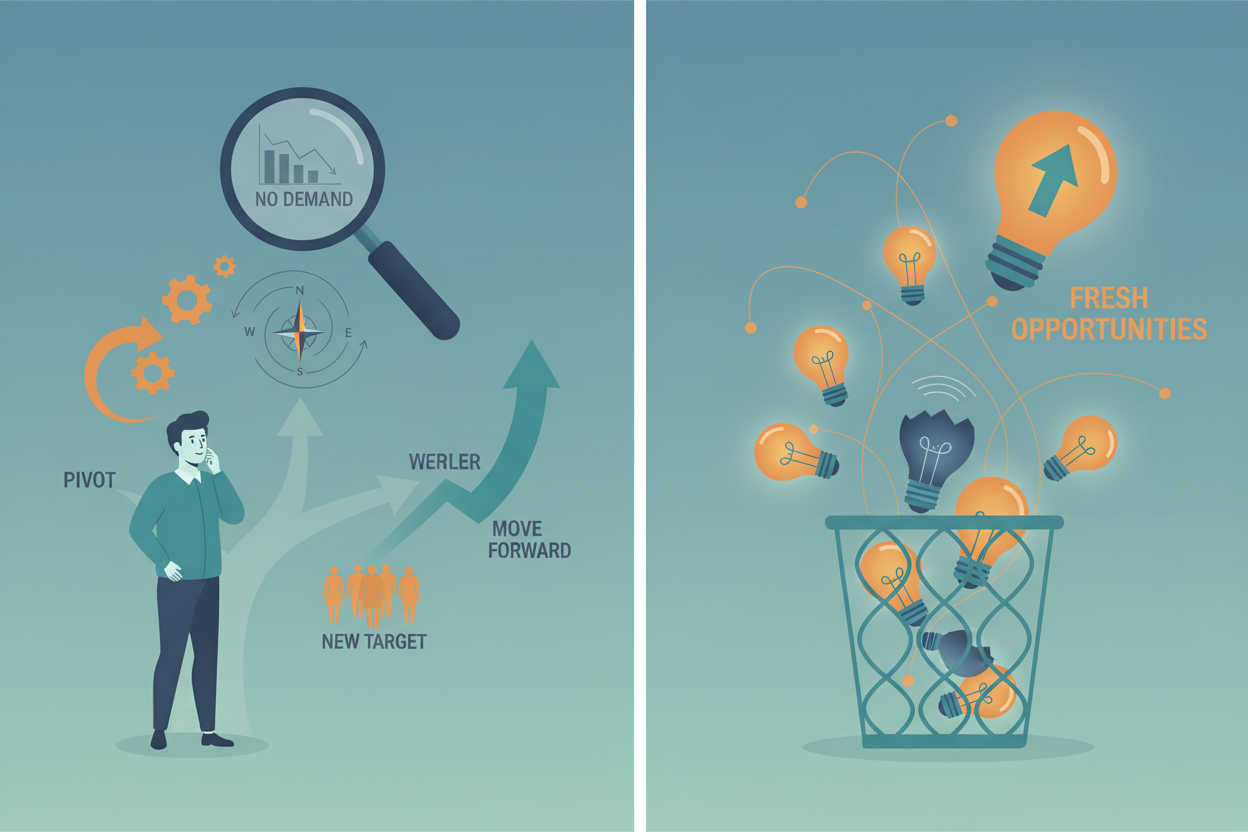
Product validation isn’t just a buzzword thrown around in entrepreneurial circles—it’s your safety net against costly mistakes. Think of it as your product’s first job interview, where the market decides whether your idea deserves a chance or needs to go back to the drawing board.
In today’s fast-paced business environment, rushing to market without proper validation is like driving blindfolded. Sure, you might reach your destination, but the odds aren’t in your favor. This comprehensive guide will walk you through proven product validation strategies that successful entrepreneurs use to minimize risk and maximize their chances of success.
Why Product Validation Matters More Than Ever
The business landscape has transformed dramatically over the past decade. Consumer behavior shifts faster than ever, market saturation is at an all-time high, and competition can emerge from anywhere in the world within hours. This reality makes product validation not just helpful, but absolutely critical.
Consider the story of Segway, which raised over $100 million before launch and was predicted to revolutionize transportation. Despite the hype and investment, it failed to gain mass market adoption because the company didn’t adequately validate consumer demand for personal transportation devices at that price point.

Contrast this with Dropbox, which started with a simple video demonstrating their file-syncing concept. Before writing a single line of complex code, they validated demand and gathered thousands of sign-ups. This approach saved them countless hours and resources while proving market demand existed.
Product validation serves multiple purposes beyond just confirming demand. It helps you understand your target audience better, refine your value proposition, identify potential pricing strategies, and uncover use cases you might never have considered. Most importantly, it builds confidence—both yours and your potential investors’.
Essential Pre-Launch Validation Methods
Before diving into digital strategies, let’s explore fundamental validation approaches that have stood the test of time. These methods require minimal investment but can provide invaluable insights.
Customer Interviews and Surveys
Direct conversation with potential customers remains one of the most powerful validation tools available. However, there’s an art to conducting effective customer interviews. Avoid leading questions like “Would you buy this product?” Instead, focus on understanding their current problems, existing solutions they use, and pain points they experience.
Start by identifying 20-30 people who fit your target demographic. Prepare open-ended questions that encourage storytelling rather than yes/no responses. For example, ask “Tell me about the last time you struggled with [problem your product solves]” rather than “Do you think this problem needs solving?”
Market Research and Competitive Analysis
Understanding your competitive landscape provides crucial validation insights. If similar products exist and are thriving, it suggests market demand. If they’re failing, analyze why—it might reveal opportunities for differentiation or indicate fundamental market issues.
Use tools like Google Trends, SEMrush, or Ahrefs to understand search volume for keywords related to your product. High search volume for problem-related terms often indicates strong market demand. Additionally, examine patent filings, industry reports, and trade publications to gauge market interest and investment levels.
Focus Groups and User Testing Sessions
While sometimes criticized for groupthink dynamics, well-structured focus groups can provide valuable qualitative insights. The key is creating an environment where participants feel comfortable sharing honest feedback, even if it’s negative.
Consider running multiple small focus groups (5-8 people) rather than one large session. This approach reduces the likelihood of dominant personalities skewing results and allows for more intimate, honest discussions.
Digital Validation Techniques That Actually Work
The digital age has democratized product validation, making it possible to test ideas quickly and cost-effectively. These online strategies can provide rapid feedback and measurable data to guide your decisions.
Landing Page Validation
Creating a simple landing page that describes your product and captures email sign-ups is one of the fastest ways to gauge interest. This approach worked brilliantly for Buffer, which created a basic landing page explaining their social media scheduling concept before building the actual product.
Your landing page should clearly communicate your value proposition, include compelling visuals or mockups, and feature a strong call-to-action. Track metrics like conversion rates, time spent on page, and traffic sources to understand how well your message resonates with visitors.
Social Media Testing and Community Engagement
Social platforms offer unparalleled access to potential customers and real-time feedback. Share your product concept in relevant Facebook groups, LinkedIn communities, or Reddit forums where your target audience congregates.
Pay attention not just to direct responses, but also to engagement metrics. High engagement rates often indicate strong interest, while low engagement might suggest your messaging needs refinement or your target audience isn’t as interested as anticipated.
Crowdfunding Platforms as Validation Tools
Platforms like Kickstarter and Indiegogo serve as excellent validation mechanisms. Success on these platforms indicates genuine market demand and willingness to pay. Even if your campaign doesn’t reach its funding goal, the process provides valuable insights into market reception and pricing sensitivity.
The key to crowdfunding validation is setting realistic funding goals and creating compelling campaign content that clearly communicates your product’s benefits. Many successful products have used crowdfunding not primarily for funding, but for market validation and customer acquisition.
Building and Testing Your Minimum Viable Product (MVP)
The MVP concept, popularized by Eric Ries in “The Lean Startup,” represents the simplest version of your product that can still provide value to customers. Building an MVP allows you to test core assumptions with real users while minimizing development time and costs.
Defining Your MVP Scope
The biggest mistake entrepreneurs make with MVPs is including too many features. Your MVP should focus solely on solving the core problem you’ve identified. Everything else is secondary and can be added later based on user feedback.
Start by listing all potential features, then ruthlessly prioritize them. Ask yourself: “If we removed this feature, would the product still solve the primary problem?” If the answer is yes, consider leaving it out of your MVP.
MVP Development Approaches
Your MVP doesn’t always need to be a fully functional product. Depending on your concept, it might be a simple prototype, a manual service that mimics your product’s functionality, or even a detailed mockup that demonstrates user flow.
For digital products, consider using no-code tools like Webflow, Bubble, or Airtable to create functional prototypes quickly. For physical products, 3D printing and basic manufacturing techniques can help you create testable prototypes without major investment.
Testing and Iteration Cycles
Once your MVP is ready, implement a structured testing process. Release it to a small group of beta users, collect feedback systematically, and iterate based on their input. This cycle of build-measure-learn should be rapid and continuous.
Track both quantitative metrics (usage patterns, conversion rates, retention) and qualitative feedback (user interviews, support tickets, feature requests). This combination provides a comprehensive view of how well your MVP addresses market needs.
Analyzing Customer Feedback and Market Response
Collecting feedback is only half the battle—the real value lies in analyzing and acting on the insights you gather. This process requires both analytical skills and emotional intelligence to separate valuable feedback from noise.
Organizing and Categorizing Feedback
Create a systematic approach to organizing feedback. Categorize comments by theme (usability, features, pricing, etc.) and sentiment (positive, negative, neutral). This organization helps identify patterns and prioritize areas for improvement.
Use tools like spreadsheets, Airtable, or specialized feedback management platforms to track and analyze responses. Look for recurring themes—if multiple users mention the same issue or request the same feature, it’s likely worth addressing.
Identifying Patterns and Trends
Pay attention to both what people say and what they don’t say. If users consistently avoid mentioning a feature you consider important, it might not be as valuable as you thought. Conversely, if they frequently ask about capabilities you hadn’t considered, these might represent opportunities for differentiation.
Also, consider the source of feedback. Power users might have different needs than casual users, and early adopters often have different preferences than mainstream customers. Weight feedback appropriately based on your target market.
Making Data-Driven Decisions
While feedback is crucial, avoid making decisions based solely on anecdotal evidence. Combine qualitative insights with quantitative data to make informed choices. If users say they love a feature but usage data shows they rarely use it, dig deeper to understand the disconnect.
Set clear criteria for what constitutes validation success. This might be achieving a certain conversion rate, reaching a specific number of pre-orders, or maintaining a minimum user engagement level. Having predefined success metrics prevents you from moving goalposts or cherry-picking favorable data.
Common Product Validation Mistakes to Avoid
Even well-intentioned entrepreneurs can fall into validation traps that lead to false confidence or missed opportunities. Understanding these common pitfalls can help you navigate the validation process more effectively.
Confirmation Bias and Leading Questions
It’s natural to want validation for your ideas, but this desire can unconsciously influence how you ask questions and interpret responses. Avoid questions that guide respondents toward positive answers, and be genuinely open to negative feedback.
Instead of asking “Don’t you think this product would be useful?” try “How do you currently handle [problem]?” The latter approach uncovers genuine behavior patterns without suggesting a preferred response.
Focusing on Friends and Family
While friends and family are easily accessible for feedback, they’re often too polite to provide honest criticism or may not represent your actual target market. Their positive responses might create false confidence in your product’s viability.
Seek feedback from strangers who fit your target demographic. Their responses will be more honest and representative of real market conditions. Consider using platforms like UserTesting, Respondent, or even approaching potential customers directly.
Ignoring Negative Feedback
Negative feedback, while difficult to hear, often contains the most valuable insights. Users who take time to explain what doesn’t work are providing a roadmap for improvement. Dismissing criticism as “they just don’t get it” is a dangerous mindset that can blind you to real problems.
Create a culture where negative feedback is welcomed and analyzed constructively. Some of the most successful products emerged from addressing initial criticism rather than ignoring it.
Moving Forward: From Validation to Launch
Successfully validating your product is just the beginning. The insights you’ve gathered should inform every aspect of your go-to-market strategy, from pricing and positioning to marketing channels and feature prioritization.
Refining Your Value Proposition
Validation often reveals gaps between what you think your product offers and what customers actually value. Use these insights to refine your value proposition, ensuring it resonates with real customer needs and preferences.
Your validated value proposition should be clear, specific, and focused on benefits rather than features. It should answer the question: “Why should customers choose your product over existing alternatives?”
Planning Your Full Product Development
With validation complete, you can approach full product development with greater confidence and clearer priorities. The feedback you’ve collected provides a roadmap for feature development and helps you allocate resources more effectively.
Create a development roadmap that prioritizes features based on customer feedback and business impact. Remember that validation is an ongoing process—continue gathering feedback throughout development to ensure you’re building what customers actually want.
Preparing for Market Launch
Your validation process has likely generated a list of interested prospects and early adopters. These individuals represent your initial customer base and can become powerful advocates for your product.
Develop a launch strategy that leverages the relationships and insights gained during validation. Consider offering special pricing or early access to validation participants as a thank-you for their input and to encourage initial adoption.
Conclusion
Product validation isn’t just a checkbox to tick before launch—it’s a fundamental practice that can mean the difference between success and failure. The strategies outlined in this guide provide a comprehensive framework for testing your ideas thoroughly while minimizing risk and investment.
Remember that validation is not about proving your idea is perfect; it’s about understanding whether there’s genuine market demand and how you can best serve that demand. Sometimes validation will confirm your assumptions, and sometimes it will send you back to the drawing board. Both outcomes are valuable because they prevent you from investing time and money in the wrong direction.
The most successful entrepreneurs view validation as an ongoing process rather than a one-time event. They continue gathering feedback, testing assumptions, and refining their products throughout the development and launch process. This approach leads to products that truly serve customer needs and have the best chance of achieving lasting success.
Start your validation journey today. Choose one or two strategies from this guide and begin testing your product idea. The insights you gain will be invaluable, regardless of whether they confirm your assumptions or challenge them. In the world of product development, knowledge is power, and validation is your path to that knowledge.
Frequently Asked Questions
How much should I spend on product validation?
Product validation doesn’t require a large budget. Many effective validation methods, such as customer interviews, landing page tests, and social media engagement, can be done for under $1,000. A good rule of thumb is to spend 5-10% of your planned development budget on validation activities. This small investment can save you thousands or even hundreds of thousands of dollars by preventing costly mistakes.
How long should the product validation process take?
The validation timeline varies depending on your product complexity and target market, but most validation processes should take 4-8 weeks. This includes time for planning your validation approach, executing tests, gathering feedback, and analyzing results. Don’t rush this process—thorough validation is worth the time investment.
What if my validation results are mixed or inconclusive?
Mixed results often indicate that your target market isn’t well-defined or your value proposition needs refinement. Consider segmenting your feedback by demographic, use case, or other relevant factors to identify patterns. You might discover that your product resonates strongly with a specific subset of your intended audience, allowing you to focus your efforts more effectively.
Can I validate a B2B product using the same methods as B2C products?
While the core principles remain the same, B2B validation often requires different approaches. Focus more on direct outreach, industry events, and professional networks rather than social media and crowdfunding. B2B validation typically involves longer sales cycles and more complex decision-making processes, so allow extra time for this process.
How do I know when I have enough validation to move forward?
Set specific validation criteria before you begin testing. This might include achieving a certain conversion rate on your landing page, receiving a minimum number of pre-orders, or getting positive feedback from a specific percentage of interviewed customers. Having predefined success metrics prevents you from continuing validation indefinitely or making decisions based on insufficient data.
What should I do if validation shows there’s no market demand for my product?
Discovering lack of market demand is actually a successful validation outcome—it’s saved you from a costly mistake. Consider whether you can pivot your product to address the real problems you’ve uncovered, target a different market segment, or modify your approach based on the feedback received. Sometimes the best business decision is to abandon an idea and move on to something with better market potential.
The Ultimate Dubai Wealth Blueprint: Tax-Free Income, Real Estate & Passive Systems
Looking to build lasting wealth in Dubai? This complete guide reveals proven strategies for expats and entrepreneurs, including tax-free income systems, real estate investment secrets, passive income streams, business setup tips, and wealth preservation tactics. Learn how expats successfully grow and protect their money in the UAE with zero income tax and unlimited potential. No fluff. Just actionable Dubai wealth building methods that work.
Dubai Wealth Secrets: Tax-Free Strategies for Entrepreneurs