Printful Profits: Making Money with Print-on-Demand Clothing and Accessories
 By
By Printful Profits: Making Money with Print-on-Demand Clothing and Accessories
Table of Contents
1. Introduction to Print-on-Demand Success
2. Understanding the Printful Business Model
3. Getting Started with Your Print-on-Demand Store
4. Designing Products That Sell
5. Marketing Strategies for Maximum Profits
6. Optimizing Your Profit Margins
7. Common Mistakes to Avoid
8. Scaling Your Print-on-Demand Business
9. Conclusion
10. Frequently Asked Questions
Introduction to Print-on-Demand Success
Have you ever dreamed of starting your own clothing brand without the massive upfront investment? Print-on-demand (POD) has revolutionized the way entrepreneurs enter the fashion and accessories market. With platforms like Printful leading the charge, you can now create and sell custom products without ever touching inventory or worrying about shipping logistics.
The print-on-demand industry has exploded in recent years, with the global market expected to reach $39.9 billion by 2031. This growth represents an incredible opportunity for creative individuals and savvy business minds to tap into a lucrative market with minimal risk.
In this comprehensive guide, we’ll explore how to build a profitable print-on-demand business using Printful, from initial setup to scaling your operations. Whether you’re a complete beginner or looking to optimize your existing POD store, this post will provide actionable insights to help you maximize your profits.
Understanding the Printful Business Model
Printful operates on a simple yet powerful business model that eliminates many traditional retail challenges. When a customer places an order on your online store, Printful automatically receives the order details, prints your design on the selected product, and ships it directly to your customer. You never handle physical inventory or deal with shipping headaches.
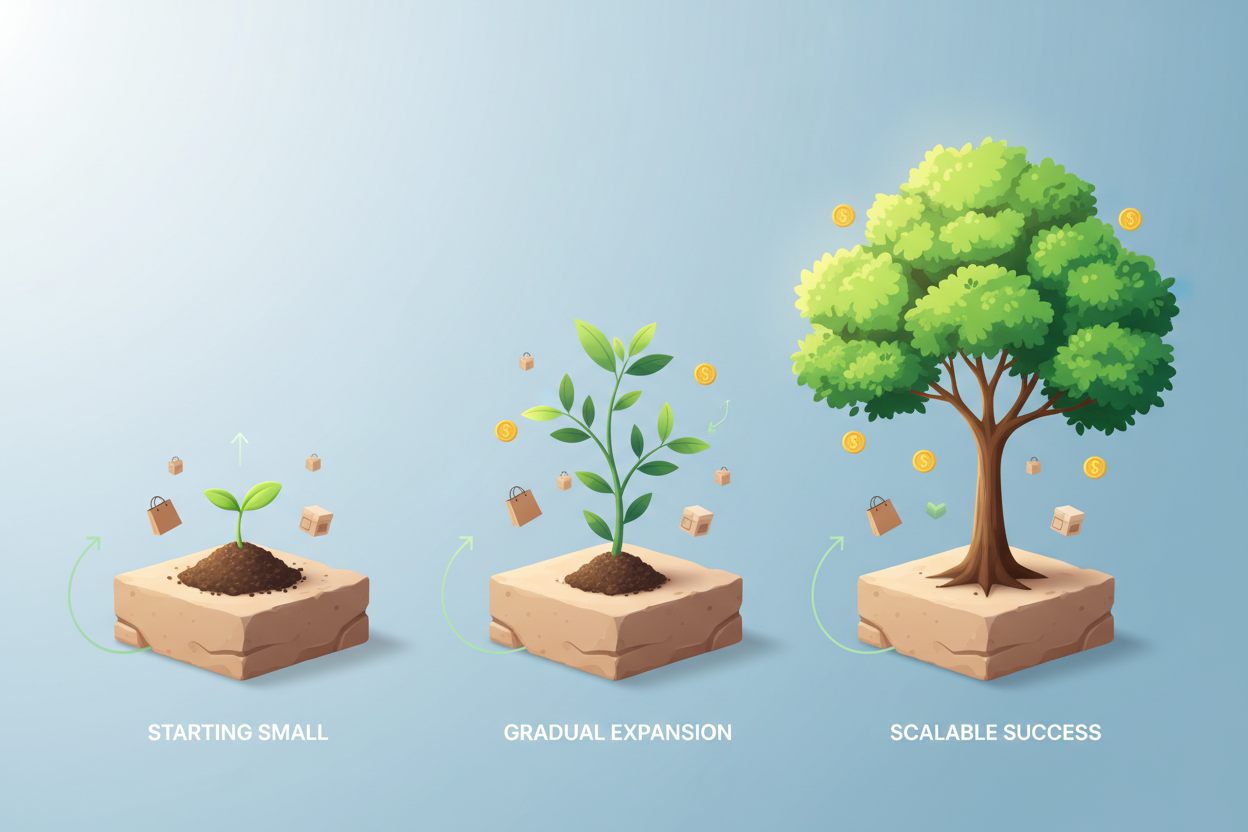
The beauty of this model lies in its scalability and low barrier to entry. You can start with just a few designs and gradually expand your product catalog based on what sells well. This approach allows you to test market demand without significant financial risk.
Printful integrates seamlessly with popular e-commerce platforms like Shopify, Etsy, WooCommerce, and Amazon. This integration means you can focus on what matters most: creating compelling designs and marketing your products effectively.
The profit potential varies depending on your niche, marketing efforts, and pricing strategy. Successful POD entrepreneurs typically see profit margins between 10-40% per item, with top performers generating six-figure annual revenues.
Getting Started with Your Print-on-Demand Store
Launching your Printful store requires careful planning and strategic decision-making. The first step involves choosing your niche and target audience. Successful POD stores often focus on specific communities, interests, or demographics rather than trying to appeal to everyone.
Research trending topics, passionate communities, and underserved markets. Consider your own interests and expertise – authenticity resonates with customers and makes marketing more natural. Popular niches include fitness enthusiasts, pet lovers, specific professions, hobby communities, and motivational quotes.
Next, select your e-commerce platform. Shopify offers the most robust features and customization options, making it ideal for serious entrepreneurs. Etsy provides built-in traffic but limits your branding opportunities. Consider your long-term goals when making this decision.
Setting up your Printful account is straightforward. Connect it to your chosen platform, explore the product catalog, and familiarize yourself with pricing structures. Printful offers over 300 products, from basic t-shirts to premium accessories, giving you plenty of options to diversify your offerings.
Designing Products That Sell
Creating designs that convert browsers into buyers requires understanding your audience’s preferences and pain points. Successful POD designs often fall into several categories: humorous sayings, inspirational quotes, niche references, artistic illustrations, and trending topics.
Quality matters significantly in the competitive POD landscape. Invest in design software like Adobe Illustrator or explore user-friendly alternatives like Canva Pro. Ensure your designs are high-resolution (300 DPI) and properly sized for each product type.
Typography plays a crucial role in design success. Choose fonts that are readable and match your brand’s personality. Avoid overly complex designs that may not translate well to smaller products or different colored garments.
Color psychology influences purchasing decisions. Research shows that certain colors evoke specific emotions and associations. Black and white designs often perform well because they’re versatile and timeless, while bright colors can attract attention and convey energy.
Stay current with design trends while maintaining your unique style. Monitor social media platforms, design communities, and competitor stores for inspiration. However, never copy existing designs – originality is essential for long-term success and legal protection.
Marketing Strategies for Maximum Profits
Effective marketing separates profitable POD stores from struggling ones. Social media marketing, particularly on Instagram and TikTok, offers excellent opportunities to showcase your products visually. Create engaging content that tells stories around your designs rather than just displaying products.
Facebook and Instagram advertising can drive targeted traffic to your store. Start with small budgets to test different audiences and ad creatives. Focus on interests, behaviors, and demographics that align with your niche. Retargeting campaigns often yield higher conversion rates than cold traffic campaigns.
Search engine optimization (SEO) provides long-term traffic growth. Optimize your product titles, descriptions, and blog content for relevant keywords. Tools like Google Keyword Planner and SEMrush can help identify valuable search terms in your niche.
Email marketing remains one of the highest ROI marketing channels. Collect email addresses through lead magnets like discount codes or design previews. Send regular newsletters featuring new products, behind-the-scenes content, and exclusive offers to maintain customer engagement.
Influencer partnerships can rapidly expand your reach within specific communities. Micro-influencers (1,000-100,000 followers) often provide better engagement rates and more affordable collaboration opportunities than mega-influencers.
Optimizing Your Profit Margins
Maximizing profits requires strategic pricing and cost management. Research competitor pricing to understand market expectations, but don’t engage in race-to-the-bottom pricing wars. Focus on value proposition rather than competing solely on price.
Consider psychological pricing strategies. Prices ending in .99 or .95 often perform better than round numbers. Premium pricing can actually increase perceived value and attract quality-conscious customers.
Product selection significantly impacts profitability. While t-shirts are popular, they’re also highly competitive with lower margins. Consider expanding into higher-margin items like hoodies, phone cases, or home decor products.
Bundle products to increase average order value. Offer discounts for purchasing multiple items or create themed collections that encourage customers to buy complementary products.
Monitor your analytics closely to identify top-performing products and marketing channels. Double down on what works and eliminate underperforming elements. Regular analysis helps optimize your resource allocation for maximum return on investment.
Common Mistakes to Avoid
New POD entrepreneurs often make predictable mistakes that can derail their success. Copyright infringement represents one of the most serious risks. Never use copyrighted images, logos, or phrases without proper licensing. This includes popular movie quotes, song lyrics, and brand names.
Poor product photography can significantly impact conversion rates. Invest time in creating or sourcing high-quality mockups that accurately represent your products. Customers can’t touch or try on your products, so visual presentation becomes critical.
Neglecting customer service can damage your reputation and long-term profitability. Respond promptly to inquiries, address concerns professionally, and go above and beyond to ensure customer satisfaction. Happy customers become repeat buyers and brand advocates.
Focusing solely on design creation while ignoring business fundamentals often leads to failure. Treat your POD store as a real business with proper financial tracking, tax planning, and growth strategies.
Impatience can derail promising ventures. Building a profitable POD business takes time, typically 6-12 months to see significant results. Maintain consistency in your efforts and continuously refine your approach based on data and feedback.
Scaling Your Print-on-Demand Business
Once you’ve established a profitable foundation, scaling becomes the next challenge. Expand your product catalog strategically by analyzing which designs and product types generate the most revenue. Create variations of successful designs across different product categories.
Consider hiring freelance designers to increase your design output while maintaining quality standards. Platforms like 99designs, Fiverr, and Upwork offer access to talented designers at various price points.
Explore additional sales channels to diversify your revenue streams. While starting with one platform makes sense, expanding to multiple channels can significantly increase your market reach. Each platform has unique advantages and customer bases.
Automate repetitive tasks using tools like Zapier or built-in platform features. Automation can handle order notifications, social media posting, and email sequences, freeing up time for strategic activities.
Consider creating your own brand and website as you grow. While marketplace platforms provide initial traffic, building your own brand offers better profit margins and customer data ownership.
Conclusion
Building a profitable print-on-demand business with Printful offers an accessible path to entrepreneurship with minimal upfront investment. Success requires combining creativity with business acumen, focusing on market research, quality designs, effective marketing, and continuous optimization.
The key lies in treating your POD venture as a legitimate business rather than a passive income scheme. Invest time in understanding your audience, creating compelling products, and building genuine relationships with customers.
Remember that profitability takes time to develop. Focus on providing value to your customers, and the financial rewards will follow. Start small, learn continuously, and scale strategically based on data-driven insights.
The print-on-demand industry continues evolving, offering new opportunities for creative entrepreneurs. By following the strategies outlined in this guide and maintaining persistence, you can build a thriving POD business that generates sustainable profits while expressing your creativity.
Frequently Asked Questions
How much money can I realistically make with Printful?
Earnings vary significantly based on effort, niche selection, and marketing effectiveness. Beginners might earn $100-500 monthly in their first year, while established sellers can generate $1,000-10,000+ monthly. Top performers achieve six-figure annual revenues.
Do I need design experience to succeed with print-on-demand?
While design skills help, they’re not mandatory. Many successful POD entrepreneurs use simple text-based designs or hire freelancers. Focus on understanding your market and creating designs that resonate with your audience rather than complex artistic abilities.
How long does it take to see profits from a Printful store?
Most successful POD businesses take 3-6 months to generate consistent sales and 6-12 months to achieve significant profitability. Initial months typically involve testing designs, optimizing marketing, and building audience awareness.
What’s the best product to start with on Printful?
T-shirts remain the most popular starting point due to universal appeal and lower production costs. However, consider your niche when selecting products. Phone cases work well for tech audiences, while mugs appeal to office workers and gift buyers.
How do I handle taxes for my print-on-demand business?
Treat your POD business like any other business for tax purposes. Track all income and expenses, including design costs, advertising spend, and platform fees. Consult with a tax professional to understand your specific obligations and potential deductions.
Can I use Printful with multiple sales channels simultaneously?
Yes, Printful supports integration with multiple platforms simultaneously. You can sell on Shopify, Etsy, Amazon, and other channels using the same Printful account. This multi-channel approach can significantly increase your market reach and revenue potential.
The Ultimate Dubai Wealth Blueprint: Tax-Free Income, Real Estate & Passive Systems
Looking to build lasting wealth in Dubai? This complete guide reveals proven strategies for expats and entrepreneurs, including tax-free income systems, real estate investment secrets, passive income streams, business setup tips, and wealth preservation tactics. Learn how expats successfully grow and protect their money in the UAE with zero income tax and unlimited potential. No fluff. Just actionable Dubai wealth building methods that work.
Dubai Wealth Secrets: Tax-Free Strategies for Entrepreneurs